What Is a Peptide COA and Why Does It Matter for Research?
When you’re buying research grade peptides, one document matters more than any marketing claim or product description: the peptide COA. A Certificate of Analysis, often called a COA, is the testing data behind the peptide product. It helps researchers verify peptide identity, peptide purity, quality, and compliance with established specifications. Without a reliable peptide COA, […]
How to Choose a Reliable Peptide Supplier: A Researcher’s Guide
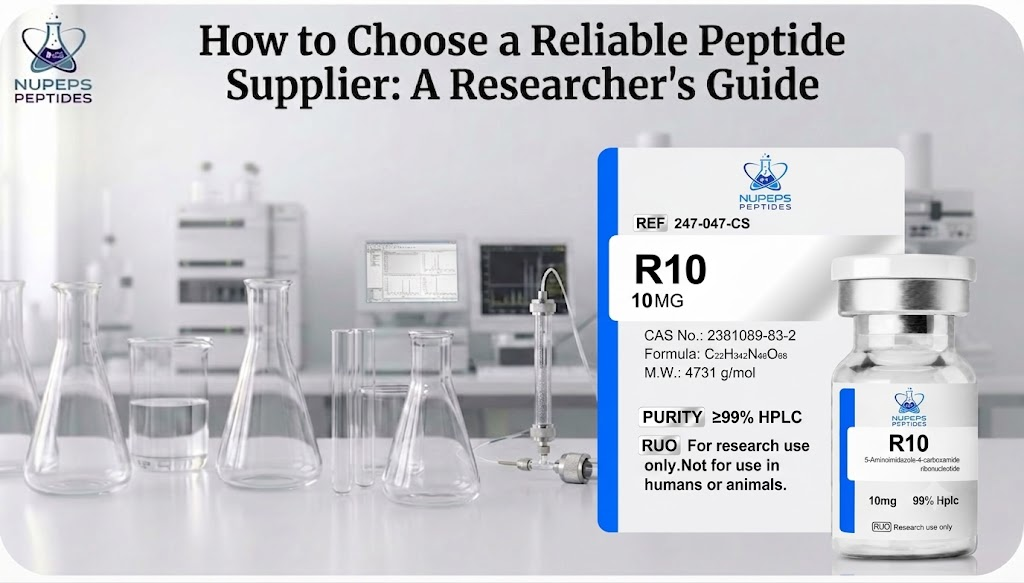
Choosing a reliable peptide supplier is one of the most important decisions a researcher can make. Whether you’re sourcing lab grade peptides for biological studies, compound development or laboratory analysis, product quality directly impacts your results. With hundreds of suppliers online, finding a trustworthy source requires careful evaluation of testing standards, transparency and regulatory compliance. […]
Copper Peptide GHK Cu in Modern Skin Research and Applications
Skin research has come a long way in the past few decades, and one compound continues to stand out for its remarkable biological profile: the GHK-Cu peptide. What Is GHK-Cu? GHK-Cu is a small tripeptide composed of three amino acids, glycine, histidine, and lysine, bound to a copper (Cu²⁺) ion. It was first identified in […]
Optimizing Cellular Energy Metabolism with Peptides

Learn how mitochondrial-targeted peptides enhance ATP production, improve energy metabolism, and support experimental studies on cellular function.
Peptides in Neuroprotection Research

Explore the potential of peptides in protecting neuronal cells, reducing oxidative stress, and advancing treatments for neurodegenerative diseases.
Enhancing Muscle Tissue Repair with Peptides

Discover how specific peptides can accelerate muscle tissue repair, improve cellular recovery, and support overall muscle health in research studies.